
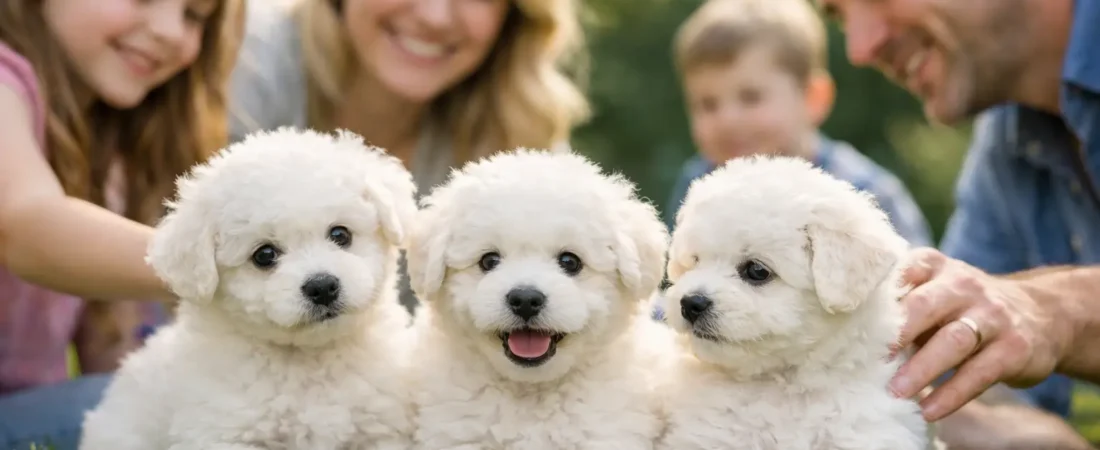
When you bring home a puppy, you are not just choosing a breed. You are choosing the environment that shaped that puppy before you ever met them. Family raised bichon frise puppies often stand out for a simple reason – their earliest days are filled with everyday sounds, gentle handling, and real human connection.
That early environment matters more than many families realize. A Bichon Frise may be known for its cheerful personality, affectionate nature, and soft white coat, but temperament does not develop in a vacuum. The way a puppy is raised in the first weeks helps influence confidence, adaptability, and how smoothly that puppy settles into a new home.
Why family raised bichon frise puppies matter
A family-raised puppy grows up around normal household life. That means hearing doors open and close, noticing different voices, seeing daily movement, and learning that people are safe and comforting. These small experiences help build a puppy that is better prepared for life as a companion rather than a dog raised in a more isolated setting.
For many buyers, this is the difference between simply purchasing a puppy and starting with one that has already been introduced to the rhythms of home life. A well-raised Bichon should not just be cute. That puppy should be learning how to engage with people, recover from new experiences, and develop the social foundation that makes training easier later on.
This does not mean every family-raised puppy is automatically perfect, and it does not mean kennel-raised dogs cannot do well. It means the home environment can offer meaningful advantages, especially for a breed that thrives on companionship and close interaction.
What makes a home-raised Bichon different
Bichon Frises are companion dogs by nature. They tend to bond closely with their people, enjoy attention, and do best when included in family life. Because of that, raising them in a home often aligns naturally with the kind of life they are meant to live.
A puppy raised inside a caring home is typically handled often and observed closely. That allows a breeder to notice developing personality traits early. Some puppies are a little bolder. Some are gentler and more reserved. That insight can help when matching a puppy to the right home, whether the buyer is a retired couple, a family with children, or a first-time dog owner looking for a manageable companion.
Home raising also creates more opportunities for intentional socialization. Early positive exposure to grooming routines, common sounds, and normal household activity can help a Bichon become more adaptable. Since this breed requires regular coat care throughout life, early exposure to brushing, touch, and routine care is especially valuable.
The role of early socialization in a companion breed
Socialization is often talked about in broad terms, but for a small companion dog, it has very practical benefits. A socially prepared puppy may be more likely to settle calmly when introduced to visitors, adapt to children, tolerate handling, and move through vet visits and grooming appointments with less stress.
That does not mean the breeder does all the work. Once a puppy goes home, the new family plays a major role in continuing that progress. But it helps tremendously when the puppy has already had a thoughtful start.
For Bichons, this early preparation can be especially helpful because they are so people-oriented. They usually want to be near their family. When that attachment is supported by positive early experiences, it often leads to a happy, responsive little dog that fits beautifully into home life.
Health, trust, and breeder transparency
Temperament is only part of the picture. Families also want to know that their puppy was bred with care, backed by health commitments, and represented honestly. That is one of the biggest reasons many buyers prefer to work directly with a dedicated breeder instead of shopping through impersonal sales channels.
A trustworthy breeder should be open about how the puppies are raised, what kind of health support is offered, and what ongoing communication looks like after adoption. For many families, AKC registration and a written health guarantee provide peace of mind, but the real confidence often comes from the breeder’s willingness to answer questions clearly and stay involved.
That ongoing relationship matters. New puppy owners often need guidance on feeding, sleeping routines, crate training, grooming expectations, and adjustment during the first weeks at home. A breeder who knows the litter personally can often provide far more helpful advice than someone who simply sold a puppy and moved on.
Is a Bichon Frise right for your household?
The Bichon Frise is appealing for good reason. This breed is small, affectionate, intelligent, and generally eager to be part of family activities. Many households also appreciate the breed’s lower-shedding coat, especially when allergies are a concern. Still, lower shedding does not mean no maintenance. Bichons need regular brushing and professional grooming to keep the coat healthy and comfortable.
They are also not a breed that enjoys being ignored. If you want a dog that is content spending long stretches alone without interaction, a Bichon may not be the best fit. They usually do best in homes where they receive companionship, structure, and regular attention.
For families with children, Bichons can be wonderful companions when the children are taught to handle a small dog gently. For seniors, they can be an affectionate and manageable size. For first-time owners, they often offer a sweet temperament and trainable nature, though consistency still matters. The right match depends less on having a perfect household and more on being prepared to include the dog in daily life.
What to ask when looking for family raised bichon frise puppies
If you are searching for family raised bichon frise puppies, ask specific questions about the puppy’s daily environment. Are the puppies handled every day? Are they raised inside the home? What kinds of sounds, routines, and interactions are they exposed to? How does the breeder begin preparing them for grooming and transitions?
You should also ask about health practices, registration, and post-adoption support. A quality breeder should welcome thoughtful questions. In fact, careful questions are usually a good sign that a buyer is trying to make a responsible decision.
It is also wise to ask about availability with patience. Well-raised puppies are not always immediately available, and that can actually reflect a more intentional breeding program. Upcoming litters, occasional older puppies, or young adults may sometimes be available, and for some homes, an older puppy can be an excellent fit.
Preparing for the transition home
Even the best-raised puppy still needs time to adjust. The first days in a new home are a major change. New smells, new people, and a different routine can feel overwhelming, even for a confident puppy. That is why preparation matters.
Set up a quiet sleeping area, establish a simple feeding schedule, and keep the first few days calm. Avoid the urge to make every moment exciting. A puppy settles more easily when life feels predictable. Gentle affection, clear routines, and patient supervision usually do more good than constant stimulation.
This is also where breeder guidance becomes especially valuable. A breeder who knows the puppy’s habits, personality, and early routine can help make that transition smoother. At The Blessed Bichons, that kind of support is part of what helps families feel more confident from the beginning.
Choosing with the long term in mind
A Bichon puppy is easy to fall in love with in a moment. The better question is whether that puppy has been raised in a way that supports the next 12 to 15 years of life with your family. Early socialization, thoughtful handling, health support, and honest breeder involvement all matter because they shape more than the first few weeks. They help shape the dog your puppy becomes.
If you are hoping for a companion who can step into family life with confidence, warmth, and a strong start, it is worth looking beyond the photo and asking how that puppy was truly raised. The right beginning does not guarantee a perfect dog, but it gives your puppy something every loving home wants to provide from day one – a foundation built on care.