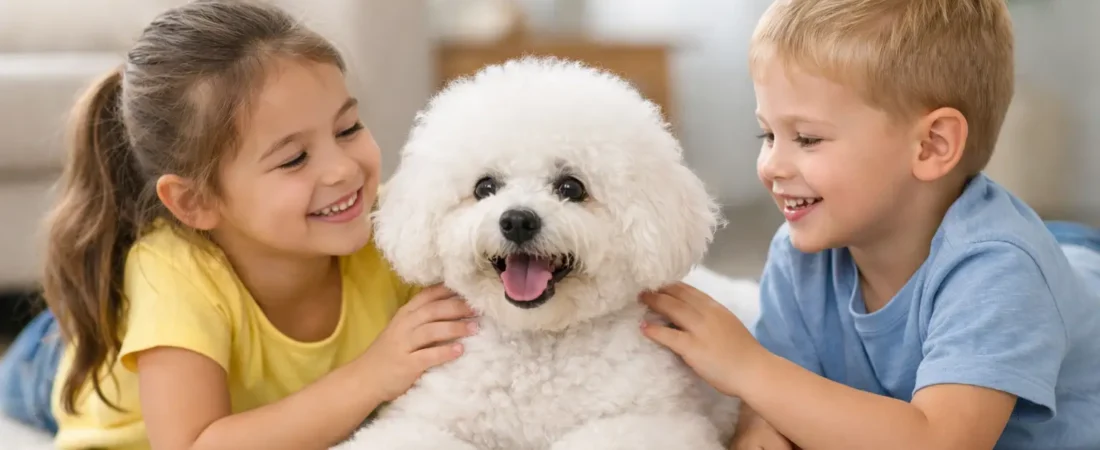
A lot of families fall in love with the Bichon Frise at first sight, then pause at the same practical question: is a bichon frise good with kids? It is a smart question, because a dog can be adorable and still not be the right fit for a busy home. In our experience, the Bichon Frise is often a wonderful match for children, but the best answer depends on the age of the child, the puppy’s early socialization, and the way the whole family plans to interact with the dog.
The good news is that this breed was developed to be a companion. That matters in everyday family life. Bichons are typically affectionate, people-oriented, and eager to stay close to their family. They usually enjoy attention, play well in shorter bursts, and adapt nicely to indoor living, which makes them especially appealing for homes with children.
Why a Bichon Frise is good with kids in many homes
One of the biggest reasons families consider this breed is temperament. A well-raised Bichon Frise is usually cheerful, gentle, and sociable. They tend to thrive on companionship rather than independence, so they often want to be where the family is, whether that means sitting nearby during homework time or joining in for a game in the living room.
Their smaller size is another advantage. Many parents want a dog that feels manageable around children, especially younger ones. A Bichon is sturdy enough for everyday family life, but still small enough to handle more comfortably than a larger breed. For first-time dog owners, that can make feeding, grooming, travel, and basic training feel less overwhelming.
Bichons also tend to be playful without being excessively intense. Some breeds bring a very high-energy style of play that can be too much for toddlers or younger children. The Bichon usually has a softer approach. They enjoy fun and movement, but they are also content to settle down and be close to their people.
For allergy-conscious families, the breed’s lower-shedding coat is often another major plus. No dog is truly hypoallergenic, but many families appreciate that the Bichon sheds less than many other breeds. That can make the home feel easier to manage, especially when children are already creating enough laundry and cleanup on their own.
It depends on the child as much as the dog
When people ask whether a Bichon Frise is good with kids, the honest answer is not just about breed traits. It is also about the child’s age, energy level, and ability to respect a small dog.
Older children often do especially well with Bichons because they can understand gentle handling. They are usually better able to recognize when a puppy needs rest, space, or calmer play. They can also participate in simple routines like supervised brushing, helping with feeding, and practicing basic commands.
Toddlers can absolutely grow up happily with a Bichon, but this stage requires more supervision. Young children are still learning how to control their movements. Grabbing fur, hugging too tightly, or chasing a puppy can happen quickly, even in loving homes. Because the Bichon is a small breed, rough handling can be stressful or even risky. That is why adult guidance matters so much.
A child-friendly dog still needs a child-ready home. Families get the best results when they teach children how to sit quietly with the puppy, pet gently, and avoid interrupting sleep or meals. Those simple habits help build trust early.
What makes the difference: early socialization
Temperament is shaped by both genetics and early experiences. A Bichon puppy that has been raised in a home environment, handled daily, and introduced to normal household activity is often better prepared for family life than a puppy raised with limited interaction.
This is one reason many families prefer to work directly with an experienced breeder they can trust. Early socialization is not just a bonus. It helps puppies become more confident, adaptable, and comfortable with sounds, routines, and human interaction.
At Blessed Bichon Frise Puppies, we have seen how much those early weeks matter. Puppies who are lovingly raised around everyday home activity often transition more smoothly into family homes because they have already been exposed to gentle handling, household sounds, and regular human attention.
That does not mean every puppy will have the exact same personality. Some are naturally more outgoing, while others are a little softer and more reserved at first. A good breeder should be honest about temperament and help match a puppy to the right kind of home.
Are Bichons patient enough for family life?
In many cases, yes. Bichons are known for their sweet nature and their desire to please, which often helps them fit well into homes with children. Still, patience should never be taken for granted in any dog.
Even the gentlest puppy has limits. If a child is loud, unpredictable, or constantly in the dog’s space, the puppy may become anxious or withdrawn. That is not a sign of a bad dog. It is a sign that the dog needs clearer boundaries and more support.
A healthy family dynamic includes protected quiet time for the puppy. A crate or cozy rest area can give the dog a place to relax without being bothered. Children should be taught that when the puppy is resting, that space is off-limits. This one habit prevents a surprising number of problems.
Training helps a Bichon Frise stay good with kids
A family-friendly breed still needs structure. Bichons are intelligent and generally respond well to gentle, consistent training. This matters in homes with children because routines help the puppy understand what is expected.
Simple training such as sit, come, leave it, and polite greeting behavior can make daily life much easier. A puppy that learns not to nip at hands, jump excessively, or dart through the house during overstimulated moments is easier for children to enjoy.
House training deserves special mention. Bichons are very capable learners, but small breeds can sometimes take a bit more patience with potty training. Families should go in with realistic expectations and a clear plan. Frequent outings, praise, and consistency go a long way.
Children can be part of training, but adults should lead it. Kids often enjoy practicing commands, but puppies need calm repetition and clear rules. When adults stay in charge, the puppy learns faster and the child-pet relationship stays positive.
Best fit for families who want companionship
The Bichon Frise is usually happiest when treated like a true member of the family. This breed does not tend to do best when left alone for long stretches every day with little interaction. They are companion dogs at heart, and that is exactly why they appeal to families.
If your home has time for play, cuddles, short walks, grooming, and regular interaction, a Bichon can be a lovely addition. If your household is extremely busy and no one is home much of the day, that is worth thinking through carefully. A dog that loves people will also notice when people are rarely around.
This breed is often a particularly nice fit for families who want a smaller indoor dog with a happy personality and an affectionate nature. They can do well in houses, condos, and apartments as long as their social and activity needs are met.
When a Bichon may not be the easiest match
Being honest about the trade-offs helps families choose well. A Bichon is not the perfect fit for every household.
If very young children are likely to treat the puppy like a stuffed toy, the timing may not be right yet. If no one in the home is prepared for regular grooming, the coat may become difficult to maintain. And if the family wants a dog that is highly independent and content with minimal attention, a Bichon may feel more emotionally connected than expected.
None of these concerns mean the breed is difficult. They simply mean this is a relationship-based dog. The families who do best with Bichons usually welcome that closeness rather than seeing it as a chore.
So, is a bichon frise good with kids?
For many families, yes. A well-bred, well-socialized Bichon Frise can be an affectionate, playful, and gentle companion for children. Their small size, cheerful personality, and people-loving nature make them especially appealing in homes that want a dog involved in daily life.
The most successful matches happen when parents look beyond the cute face and prepare for the real work of raising a puppy. Gentle supervision, respectful child-dog interactions, consistent training, and a loving routine all matter. When those pieces are in place, a Bichon often becomes more than a pet. It becomes the little shadow following the kids from room to room, ready to play, rest, and grow up right alongside them.
If you are choosing a puppy for a child-centered home, it helps to think less about finding a perfect breed and more about creating the kind of home where a good-natured puppy can truly thrive.