
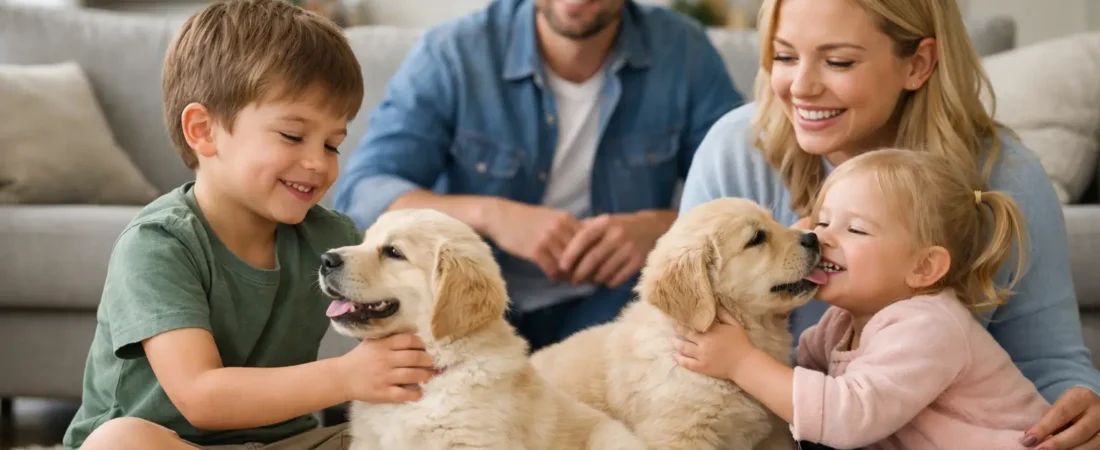
A puppy’s first lessons happen long before a leash walk around the neighborhood. They happen when a doorbell rings, a child laughs, a vacuum starts, dinner is prepared, or someone settles onto the couch for the evening. The in-home puppy socialization benefits are especially meaningful for families who want a Bichon Frise that feels comfortable being part of everyday life rather than overwhelmed by it.
For a small companion breed known for its affectionate nature, a calm and caring home beginning helps build a strong foundation. Socialization is not about pushing a puppy into every new situation at once. It is about introducing ordinary sights, sounds, handling, and routines gradually, positively, and at a pace that helps the puppy feel safe.
What In-Home Socialization Really Means
In-home socialization is the steady, age-appropriate exposure a puppy receives while living in a family environment. A well-raised puppy may hear normal household sounds, experience gentle human interaction, spend time on different safe surfaces, and become familiar with the rhythm of daily care.
This early experience is valuable because a family home is full of small changes. People move from room to room. Appliances make noise. Visitors may arrive. Children may play nearby. A puppy that has been thoughtfully introduced to these normal moments is often better prepared to adjust when joining a new family.
Socialization is also more than meeting people. It includes learning that kind handling is safe, that brief periods of rest are normal, and that unfamiliar but harmless sounds do not need to cause alarm. The goal is not a puppy who has seen everything. The goal is a puppy who has learned to approach new experiences with trust and curiosity.
In-Home Puppy Socialization Benefits That Families Notice
Families often notice the value of home-based socialization in the first days after bringing their puppy home. While every puppy has an individual personality and needs time to settle in, a puppy with a thoughtful early foundation may adjust to household life with more ease.
A more confident start in a new home
Leaving familiar surroundings is a major transition for any puppy. A puppy who has already experienced a gentle variety of household routines may be more adaptable when introduced to a new kitchen, living room, sleeping area, and family schedule.
That does not mean there will be no adjustment period. Even a well-socialized Bichon Frise puppy may need quiet time, reassurance, and consistency during the first week. However, early positive exposure can make those new experiences feel less foreign. Confidence grows when a puppy learns that new places can still be safe places.
Comfort with everyday sounds and movement
Daily life is rarely silent. Televisions, washing machines, conversations, footsteps, and doors opening and closing are all part of a typical home. Puppies raised around normal, controlled household activity have an opportunity to become familiar with these sounds before they join their forever families.
For families with children, this can be particularly helpful. Young children bring happy energy, movement, and occasional noise. A Bichon Frise puppy should still be given a quiet retreat and supervised carefully around children, but early exposure to respectful family activity can support a smoother introduction.
Gentle handling and grooming readiness
Bichon Frises are loved for their soft, fluffy coats, and regular grooming is part of responsible care. A puppy that has been gently accustomed to being touched on the paws, ears, face, and body may find future brushing, bathing, and basic grooming routines less unfamiliar.
This is not a substitute for patient training at home or professional grooming care. New owners should continue handling sessions in short, pleasant moments, pairing calm praise with gentle touch. The early lesson is simple: being cared for by people can be comfortable and reassuring.
Better preparation for companionship
Bichon Frises thrive on closeness with their people. They are often happiest when included in family life, whether that means relaxing beside someone working from home, greeting familiar guests, or joining in quiet evening time.
Home socialization supports this companion-dog role because puppies learn the patterns of living near people. They begin to understand that human activity comes and goes, that rest is part of the day, and that affection can be calm rather than exciting all the time. This can be especially comforting for first-time dog owners who want a puppy that has been raised with individual attention from the beginning.
Why Socialization Should Be Gentle, Not Busy
More exposure is not always better. A puppy does not need constant activity, a crowded schedule, or endless introductions to become well socialized. Too much stimulation too quickly can be tiring for a young puppy.
The most helpful experiences are calm, brief, and positive. A puppy might listen to a blender from a comfortable distance, walk across a soft rug and a smooth floor, or receive gentle attention from different trusted adults. The puppy’s response matters. If the puppy seems tired, worried, or overstimulated, it is time to slow down and provide rest.
This is one reason a home setting can be so valuable. It allows socialization to happen naturally throughout the day, rather than feeling like a series of forced events. Puppies can explore, play, nap, and return to familiar comfort while learning about the world around them.
How New Families Can Continue the Foundation
A carefully socialized puppy still needs guidance after going home. The first few months with a new family are an opportunity to build on the positive foundation already in place. Consistency matters more than doing everything at once.
Start by making the home predictable. Set up a comfortable sleeping space, offer regular meals, provide frequent potty breaks, and allow the puppy time to observe each room without pressure. Keep greetings calm during the first few days, especially if several friends or relatives are eager to meet the new arrival.
Introduce new experiences gradually. A short car ride, a visit to a clean and appropriate environment, or a gentle meeting with a healthy, well-mannered dog can all be useful when approached thoughtfully. Follow your veterinarian’s guidance on when it is appropriate for your puppy to visit public areas or interact with other dogs.
When children are involved, teach them how to participate in a puppy’s early learning. Sitting quietly on the floor, offering a toy, and using soft voices can help create positive associations. Puppies should never be chased, startled awake, or carried around without support. Respectful interaction protects both the child and the puppy while building trust.
The Role of the Breeder’s Home Environment
A puppy’s early environment shapes the beginning of its story. Families looking for a Bichon Frise often ask about health records, veterinary care, and temperament, and those questions matter. It is also worthwhile to ask how puppies are raised day to day.
Are they accustomed to kind handling? Do they experience normal household routines? Are they given time for rest, play, and individual attention? Clear answers help families understand the care behind a puppy’s early development.
At Blessed Bichon Frise Puppies, we believe a puppy deserves a loving home environment where daily care includes gentle socialization and close observation. This approach allows us to get to know each puppy’s personality while helping prepare them for the companionship families hope for.
A Strong Beginning, Then a Shared Journey
No breeder can promise that a puppy will respond the same way to every new experience. Temperament, family routines, training, health, and the care a puppy receives after going home all play a role. Still, early home-based socialization gives families a meaningful starting point: a puppy familiar with kindness, everyday life, and the comfort of being close to people.
When your new Bichon Frise arrives, let the relationship unfold at a puppy’s pace. Offer patient guidance, protect quiet rest time, celebrate small moments of bravery, and allow trust to grow one ordinary day at a time.