
That first night home is usually the moment it feels real. Your Bichon Frise puppy is tiny, curious, soft as a cloud, and suddenly looking to you for comfort, structure, and safety. If you are wondering how to care for a bichon frise puppy, the good news is that this breed tends to thrive when family life is calm, consistent, and full of gentle attention.
Bichons are affectionate companion dogs. They want to be near their people, and they usually respond beautifully to kind routines. That does not mean puppyhood is effortless. Like any young dog, a Bichon needs patience during house training, frequent meals at the right age, regular grooming, and thoughtful socialization so that confidence grows along with good manners.
How to care for a bichon frise puppy at home
The biggest gift you can give your puppy in the early weeks is predictability. Puppies settle faster when each day follows a similar rhythm. Meals happen on time, potty breaks happen often, naps are protected, and play stays short and positive.
Set up one small area of the home where your puppy can rest without too much commotion. A crate or puppy pen can help, especially during house training and overnight sleep. Keep the space clean, quiet, and close enough that your puppy does not feel isolated. Bichons are social by nature, so they often do better when they can hear and sense family nearby.
It also helps to puppy-proof before problems start. Shoes, cords, houseplants, children’s toys, and anything small enough to swallow should be picked up. A Bichon puppy is bright and curious, and prevention is easier than constant correction.
Feeding and water needs
Young puppies do best on a quality puppy food formulated for small breeds unless your veterinarian recommends something different. Small puppies have small stomachs, so several smaller meals each day are usually easier than one or two large ones. Your breeder’s feeding schedule is often the best place to begin because it gives your puppy continuity during a major transition.
If you plan to change foods, do it gradually over several days. Sudden diet changes can upset a puppy’s stomach, and the first week at home already comes with enough adjustment. Fresh water should always be available, although some families choose to monitor intake close to bedtime while house training is still in progress.
Treats are useful for training, but portion size matters. With a small breed, those extra bites add up quickly. Use tiny rewards and keep training sessions short so your puppy stays engaged without getting overfed.
Potty training takes consistency, not force
House training is one of the first concerns for most families, and with a Bichon, consistency matters more than strictness. Take your puppy out after waking, after meals, after play, and before bed. Very young puppies also need frequent breaks between those times. If you wait for obvious signs every time, you will miss a few opportunities.
Choose one potty spot and use the same door and same cue words. Praise warmly when your puppy gets it right. That immediate positive feedback helps puppies understand what you want much faster than scolding after an accident.
Accidents should be expected. Clean them thoroughly and move on. If accidents are happening often, the answer is usually not harsher correction. It is a tighter schedule, closer supervision, or a smaller safe space indoors.
Sleep, play, and exercise
A Bichon Frise puppy can look full of energy one minute and completely worn out the next. That is normal. Puppies need a surprising amount of sleep, and overtired puppies often become nippy, noisy, or extra wild.
Short play sessions are better than long, overstimulating ones. Gentle tug, soft toys, brief training games, and supervised exploring are enough for most young Bichons. Avoid intense exercise, repeated jumping off furniture, or long walks while your puppy is still developing. Their joints and coordination are still maturing.
Children should be shown how to sit on the floor and interact calmly. Bichons are wonderful family companions, but a tiny puppy can be injured by rough handling or dropped during excited play. Supervision helps everyone build trust from the beginning.
Grooming is part of bichon frise puppy care
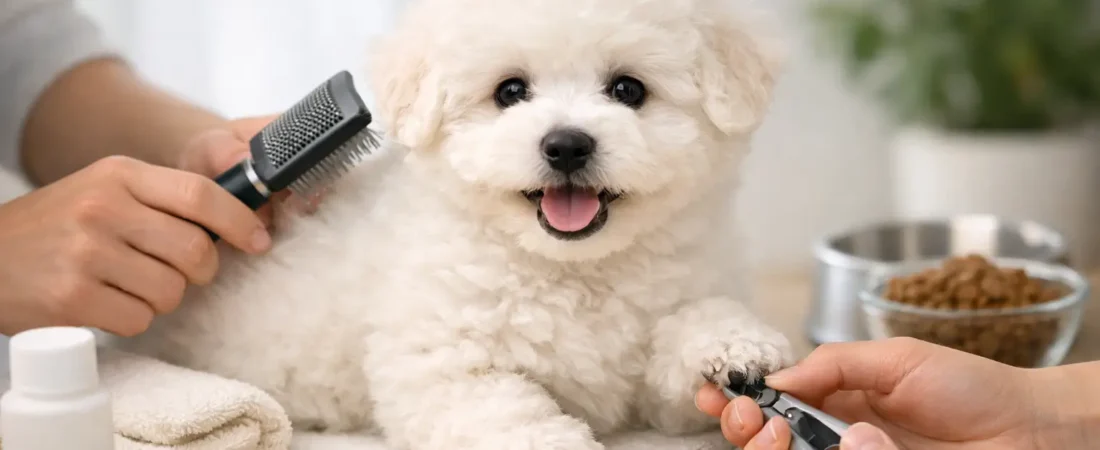
If you are learning how to care for a bichon frise puppy, grooming needs to be high on the list. The Bichon coat is one of the breed’s most loved features, but it does require regular upkeep. Waiting until the coat mats is uncomfortable for the puppy and much harder for the owner.
Start brushing early, even if your puppy’s coat still seems easy. Gentle daily or near-daily brushing helps your puppy learn that grooming is normal. Focus on making it calm and positive. A few minutes at a time is enough at first.
You will also want to get your puppy comfortable with face wiping, paw handling, ear checks, and regular baths as needed. The eye area may need gentle cleaning because light-colored coats can show tear staining more easily. Nails should be kept trimmed, and many families find it easiest to stay on a regular grooming schedule with either home care, a trusted groomer, or a combination of both.
The trade-off with a beautiful, fluffy coat is maintenance. For many families, it is well worth it. The key is staying ahead of tangles instead of trying to fix them once they are severe.
Socialization and confidence building
A well-socialized Bichon puppy is not one who has been pushed into every new situation. It is one who has been introduced to the world in a steady, reassuring way. New sounds, visitors, car rides, surfaces, household routines, and friendly handling all help build confidence.
Keep those experiences positive and age-appropriate. Let your puppy observe, sniff, and approach at their own pace. Offer praise and treats for calm curiosity. If your puppy seems overwhelmed, back up and make the experience easier.
This matters especially for companion breeds because temperament shows up in daily life. A confident puppy is generally easier to groom, easier to travel with, and more relaxed around guests and family activity. For first-time owners, that early investment in socialization often pays off quickly.
Training a Bichon puppy kindly and clearly
Bichons are smart and usually eager to connect with their people, which makes them very trainable when the approach is gentle and consistent. Start with simple skills such as their name, come, sit, and settling quietly for short periods.
Use praise, repetition, and small food rewards. Training should feel like communication, not confrontation. Harsh methods can make a sensitive puppy confused or hesitant, while positive routines build trust.
It also helps to teach everyday manners early. Waiting at doors, being handled calmly, relaxing in a crate, and learning not to mouth hands are all part of raising a pleasant adult companion. These are not dramatic lessons, but they shape family life in meaningful ways.
Veterinary care and health routines
Your puppy should stay on schedule with routine veterinary visits, vaccinations, and parasite prevention based on your veterinarian’s guidance. Keep all health records organized and bring questions with you to appointments. New owners often forget what they wanted to ask once they are in the exam room.
At home, pay attention to appetite, energy level, stool quality, and behavior. You know your puppy’s normal patterns better than anyone once a routine is established. If something changes noticeably, contact your veterinarian for guidance.
General wellness also includes simple habits such as keeping your puppy clean, maintaining a healthy body condition, and creating a low-stress home routine. Puppies do best when care is proactive rather than reactive.
The emotional side of puppy care
One part of how to care for a bichon frise puppy that does not get enough attention is emotional security. This breed bonds closely with people. That closeness is a wonderful part of Bichon life, but it also means your puppy needs help learning confidence when left alone for short periods.
Practice brief separations from the start. Give your puppy a safe space, a calm routine, and short departures that do not feel dramatic. If every exit becomes an emotional event, your puppy may struggle more with alone time later.
Just as important, do not expect perfection in the first few weeks. Puppies are learning everything at once – where to potty, when to sleep, what words mean, who their family is, and how this new home works. Progress often comes in small steps.
Families who work with a breeder who offers ongoing support often feel more confident during this stage. At Blessed Bichon Frise Puppies, we have seen how much easier the transition can be when new owners have honest guidance and a steady routine from day one.
Your Bichon puppy does not need a perfect home. They need a prepared one, with patient hands, clear routines, and plenty of affection. When care is consistent and kind, these little dogs have a beautiful way of growing into cheerful, devoted companions who feel like part of the family almost immediately.