
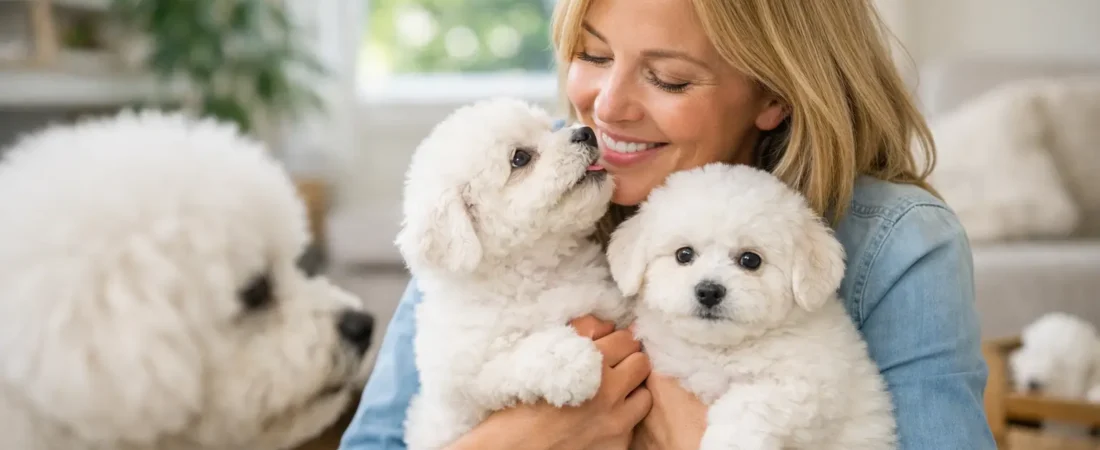
The puppy who curls up beside your child during a movie or follows you from room to room begins learning about family life long before adoption day. That is the heart of why choose a home breeder is such an important question for prospective Bichon Frise families. A thoughtfully raised puppy is not simply born into a program – it is welcomed into daily routines, gentle handling, household sounds, and caring human interaction from its earliest weeks.
For families looking for a small, affectionate companion, the setting where a puppy is raised can shape both the adoption experience and the transition home. A home breeder offers a more personal path, centered on knowing each puppy as an individual and helping each family prepare for the commitment ahead.
Why Choose a Home Breeder for a Bichon Frise?
A home environment gives puppies meaningful exposure to the ordinary moments that make up family life. They may hear a television in the next room, the hum of a dishwasher, footsteps in the hallway, or calm conversations throughout the day. These experiences are not a substitute for continued training after adoption, but they can provide a gentle foundation for a puppy entering a new home.
For a Bichon Frise, that foundation matters. Bichons are known for their affectionate nature, bright personality, and close connection with their people. They often thrive when they are included in family routines and given patient guidance. A puppy raised with regular, appropriate attention in a home setting has the opportunity to become familiar with kind human contact from the beginning.
The advantage is also personal. Rather than feeling like one of many names on a list, families can have conversations with someone who has observed the litter’s development day by day. A responsible home breeder can share practical details about a puppy’s temperament, routines, feeding schedule, and early milestones, helping families make a more informed match.
Early Socialization Happens in Everyday Moments
Socialization is often discussed as if it were one big event. In reality, it is made up of many small, positive experiences over time. Gentle handling, supervised play, rest periods, basic grooming exposure, and calm interaction with people all help a young puppy become more comfortable with the world around them.
Home-raised puppies are often introduced to these experiences as part of a consistent daily rhythm. They can learn that being picked up carefully is safe, that a soft brush is nothing to fear, and that quiet time is just as normal as playtime. For a fluffy breed like the Bichon Frise, early comfort with routine grooming and handling can be especially helpful as families establish lifelong care habits.
This does not mean every puppy will have the same personality. Some are more outgoing, while others may be more observant or cuddly. A good breeder does not force a puppy into a label. Instead, they pay attention to individual traits and communicate honestly about what they see. That insight can be valuable for first-time dog owners, families with children, and households that already have a pet.
A Smaller Program Allows for Closer Observation
Carefully planned litters allow a breeder to focus on details that are easy to miss in a less personal setting. That includes tracking early growth, keeping health records organized, following a veterinarian-guided care schedule, and noticing changes in appetite, energy, or behavior. Families should receive clear information about the puppy’s age-appropriate vaccinations, routine deworming, veterinary health examination, and microchip identification.
Transparency is a meaningful part of responsible breeding. It helps new owners understand what care their puppy has already received and what steps will come next once the puppy is home. Health records and a puppy care guide are not just paperwork. They are useful tools that help families begin with consistency during a busy and exciting transition.
At Blessed Bichon Frise Puppies, our family-operated approach is built around carefully planned litters, individual attention, and open communication. After more than 14 years of raising Bichon Frise companions, we understand that families want both the joy of bringing home a puppy and the reassurance of knowing where that puppy’s journey began.
The Breeder Relationship Should Continue After Adoption
Choosing a breeder is also choosing a source of guidance. New puppy owners commonly have questions during the first days at home: How can we make bedtime easier? When should we offer meals? What is the best way to introduce the puppy to our resident dog? These are normal questions, and thoughtful breeder support can make them feel far less overwhelming.
Lifetime breeder support does not replace veterinary care or professional training when those services are needed. It does, however, give families a knowledgeable, familiar point of contact for general guidance about the puppy’s established routines and breed-specific habits. The best support is warm, practical, and free of pressure.
This relationship is particularly reassuring for buyers working with a breeder from another state. Families in Florida, Texas, California, Georgia, Pennsylvania, and beyond may need help coordinating a safe trip home, whether they choose pickup, ground transportation, or a flight nanny. Clear communication around travel plans, timing, and the puppy’s comfort helps everyone feel prepared.
Home-Raised Does Not Mean Families Can Skip Preparation
A loving beginning is valuable, but a successful adjustment still depends on the home a puppy enters. Before bringing home a Bichon Frise, families should prepare a quiet sleeping area, appropriate food and supplies, a reliable veterinarian, and a realistic plan for potty training, supervision, and daily companionship. Bichons are people-oriented dogs, and they do best when they are not expected to figure everything out alone.
It also helps to discuss household expectations before adoption day. Decide who will handle morning walks, grooming appointments, training practice, and playtime. If children will be involved, teach them how to sit calmly, use gentle hands, and allow the puppy to rest without interruption. A puppy’s first weeks are a time for patience, structure, and plenty of encouragement.
There are trade-offs to consider. A home breeder may have fewer puppies available at any one time, and families may need to wait for a planned litter or the right match. That wait can be worthwhile when it gives you time to prepare and allows the breeder to prioritize the needs of each puppy and family.
What to Look for When Speaking With a Home Breeder
The right conversation should leave you feeling informed, not rushed. Ask how the puppies are raised, what early socialization experiences they receive, and what veterinary care is provided before they go home. Ask what records and guidance will be sent with your puppy. You can also ask how the breeder learns about a puppy’s developing personality and how they help families choose a companion that suits their lifestyle.
Listen for thoughtful, specific answers. A breeder who knows their puppies well can often describe their routines, preferences, and progress with genuine familiarity. They should also ask questions about your home, schedule, children, and experience with dogs. Those questions show care for the long-term fit, not just the adoption day.
A Gentle Start Can Build Lasting Confidence
The best reason to choose a home breeder is not that every puppy will arrive fully trained or perfectly adjusted. Puppies still need time, consistency, and loving leadership. The value lies in giving them a caring, well-supported beginning and giving families a trusted connection as they start life together.
When you are ready to welcome a Bichon Frise, look for a breeder whose priorities reflect your own: healthy beginnings, thoughtful socialization, honest communication, and support that remains available after the puppy settles into your home. That kind of care creates room for the little moments that matter most – a happy greeting at the door, a warm lap at the end of the day, and a companion who feels truly part of the family.